AI models / NEWS ANALYSIS
Claude Fable 5.1 and Mythos 5.1: pricing, safeguards and agent use cases
Anthropic has released Claude Fable 5.1 with a restricted Mythos variant. Here is what the pricing, safeguards and agent capabilities mean for teams.
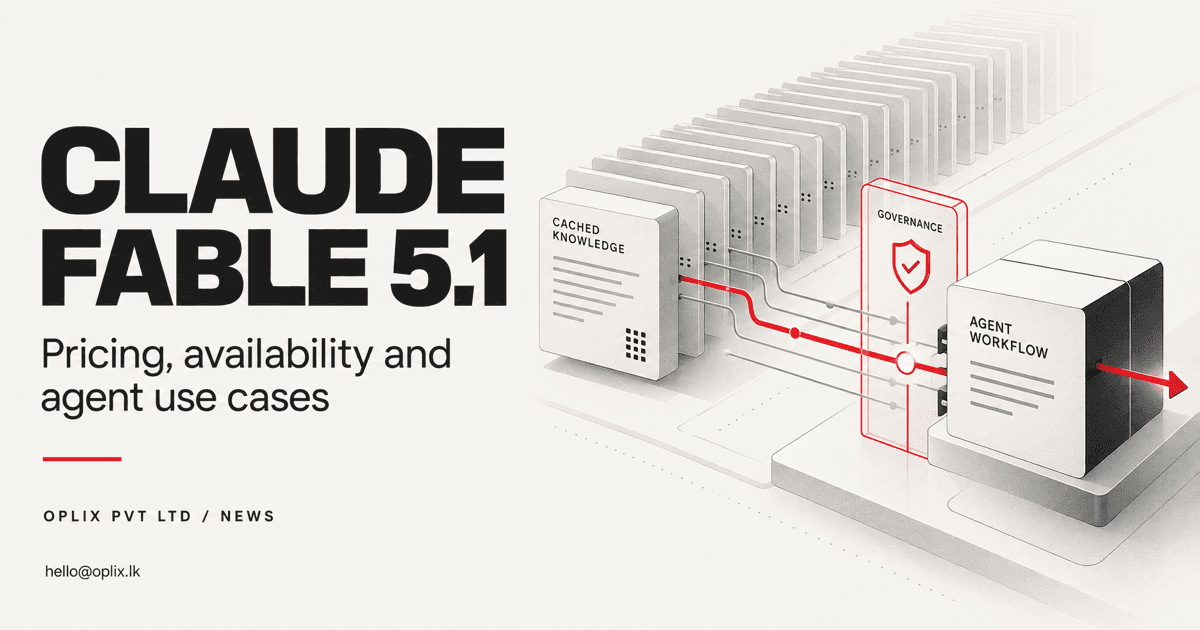
Anthropic announced Claude Fable 5.1 and Claude Mythos 5.1 on September 1, 2026. They use the same underlying model but apply different safeguard profiles: Fable is generally available, while Mythos is restricted. For teams building agents, the release highlights a practical reality—capability, access and governance must be evaluated together.
What are Claude Fable 5.1 and Mythos 5.1?
Anthropic positions Fable 5.1 as the broadly available model in the pair. Mythos 5.1 is intended for restricted access under a different safeguard profile. The models are available through Anthropic’s API and supported cloud platforms, including Amazon Web Services, Google Cloud and Microsoft Azure.
The distinction matters because a model name alone does not describe the operating environment. Procurement, data handling, cloud controls and permitted use may vary by provider and access tier. Teams should confirm the exact model, region, retention settings and contractual terms available in their chosen channel.
Claude Fable 5.1 pricing at launch
Anthropic lists cache reads at $0.25 per million tokens, input at $10 per million tokens and output at $50 per million tokens. Prompt caching can reduce repeated-input costs when an agent repeatedly uses the same instructions or reference material.
Anthropic estimates that Fable can be about 25% less expensive for typical workloads and up to 45% less expensive for agentic workloads. These are vendor estimates. Actual cost depends on context size, cache usage, retries, tool calls and the amount of generated output.
The right metric is cost per accepted task. An inexpensive run that needs extensive correction may cost more operationally than a higher-priced run that passes review consistently.
Which agent workflows are a good fit?
Fable 5.1 is worth testing where a task has several steps and must maintain context:
- preparing a structured research brief from approved sources;
- helping developers investigate and implement a bounded change;
- classifying, enriching and routing operational requests;
- drafting documents from controlled internal knowledge;
- coordinating tools while a human approves high-impact actions.
Avoid beginning with an open-ended mandate. A production agent should know which systems it can use, which actions are prohibited and when it must stop for review.
How should teams evaluate the safeguards?
Start with the risks of the workflow, not a generic model score. List the data the agent can see, the actions it can take and the harm caused by an incorrect or manipulated instruction. Then apply least privilege, isolated execution and auditable tool calls.
If the system handles customer information, proprietary code or regulated data, involve the appropriate security and legal owners. Verify the provider’s current documentation instead of assuming every cloud route has identical terms.
A practical comparison plan
Build a test set from real examples, including normal cases, ambiguous requests and known failure modes. Run the same set against Fable and the alternatives already available to the team. Score accuracy, completeness, review time, latency and total cost.
The winner may differ by workflow. A company can route routine work to a lower-cost model and reserve a more capable model for difficult cases, provided the routing itself is tested and observable.
Oplix perspective
The Fable and Mythos release reinforces the need for model-independent workflow design. Oplix helps businesses turn a promising model into a controlled system: clear inputs, limited permissions, reliable integrations, human approval and measurable acceptance criteria. That structure makes it easier to change models later without rebuilding the entire operation.
Primary sources
TURN THE UPDATE INTO A USEFUL SYSTEM
How Oplix can help
Explore the services directly related to this development.
AI Development
Custom AI agents, assistants and product features connected to your data, tools and business workflows.
Explore AI Development →AI Automation
Connect business tools, process information, qualify leads, trigger actions, and draft communications—with people in control when judgment matters.
Explore AI Automation →Software Development
Custom dashboards, portals, mobile apps, internal tools, APIs, and SaaS products shaped around how your business actually operates.
Explore Software Development →