The coordination problem
Documents pile up in shared inboxes, while deadlines and missing items are tracked manually.
How the workflow could operate
Documents arrive
The shared inbox captures incoming documents and preserves their source context.
Responsible: Shared inbox. Output: Document intake.
Information organized
Document type and relevant fields are extracted for review, with uncertain fields flagged.
Responsible: AI + filing rules. Output: Suggested classification.
Records matched
The workflow links the item to the appropriate client or operational record.
Responsible: CRM / document store. Output: Matched record.
Specialist reviews exceptions
A specialist reviews uncertain matches and classifications before the AI workflow continues.
Responsible: Client review queue. Output: Verified information.
Deadline task created
Approved items receive an owner and a due date based on the business process.
Responsible: Task workflow. Output: Owned deadline task.
Daily report prepared
The team sees completed work, missing documents, and outstanding exceptions.
Responsible: Reporting workflow. Output: Operational summary.
What to agree before implementation
Identify the source of each record, the fields required for the next step, the person who owns exceptions and the conditions for approval. Confirm permissions and test incomplete, duplicated and failed items before connecting a live customer-facing action.
Choose the right starting point
Use Oplix Automate to connect a repeatable workflow, AI Development for custom agents and AI product features, or Oplix Build when the team needs a dedicated application.
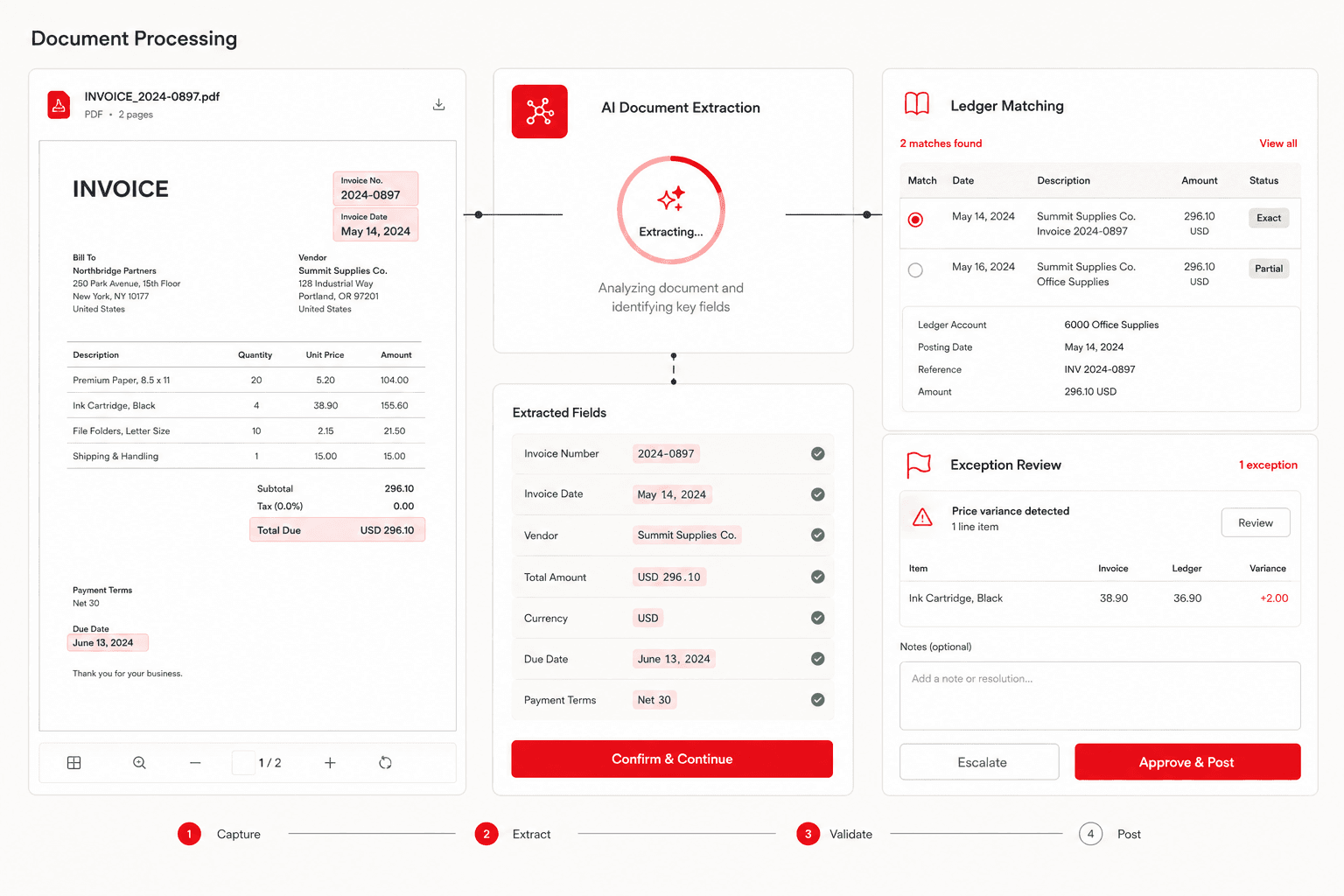
Try the interactive workflow explorerOriginal AI-generated concept image. Reviewed September 5, 2026.