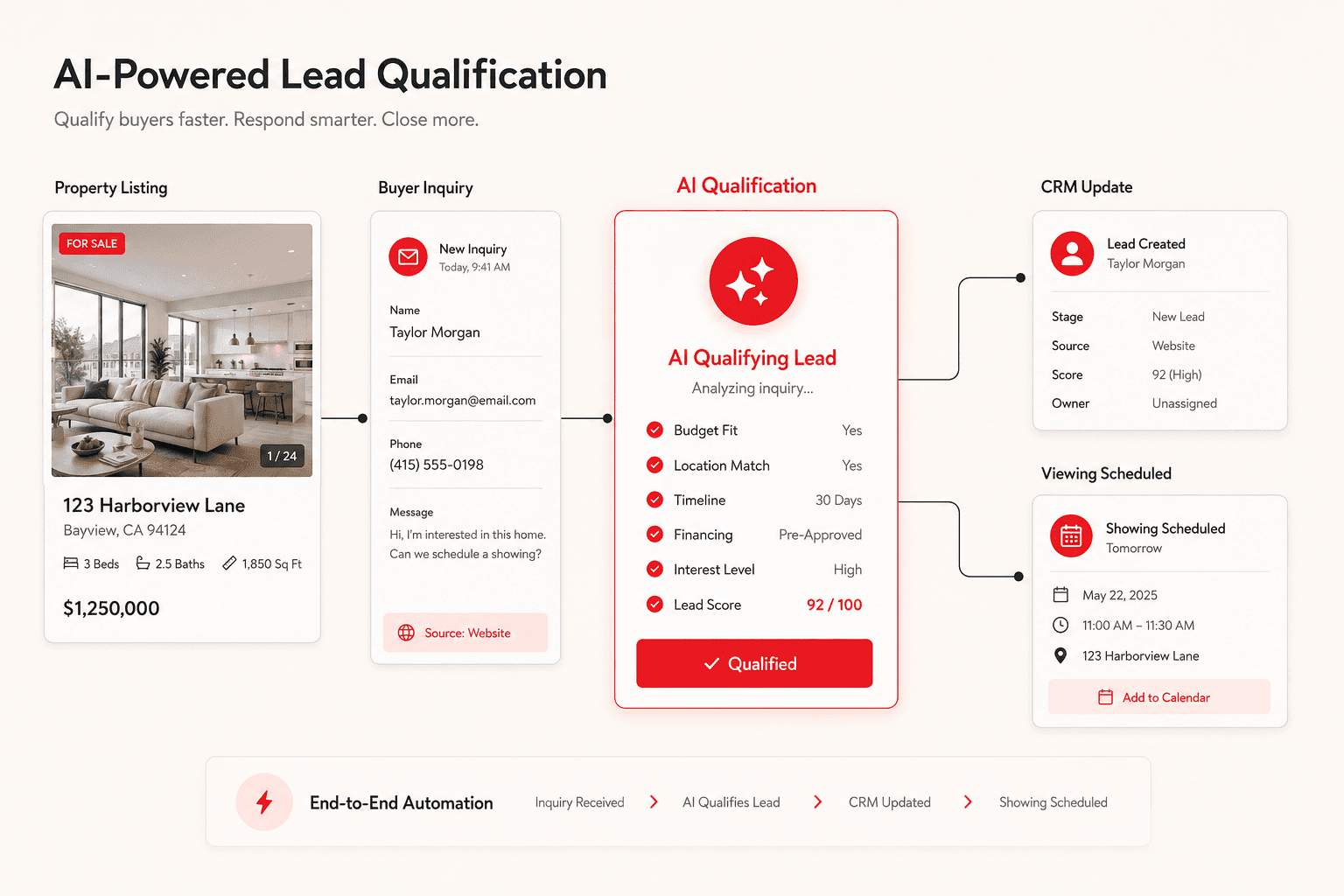
The coordination problem
Leads move between inboxes and agents. Follow-up depends on who remembered to check.
How the workflow could operate
Lead captured
An inquiry arrives through a property form or a connected lead source.
Responsible: Website / lead source. Output: Contact and interest.
Interest organized
Property, location, and viewing preferences are structured into useful fields.
Responsible: AI qualification agent. Output: Qualified context.
Owner assigned
The record is routed using the agreed territory or team assignment rules.
Responsible: CRM routing. Output: Named lead owner.
Agent review
The assigned person confirms suitability and reviews the proposed next action.
Responsible: Responsible agent. Output: Approved action.
Viewing coordinated
The owner confirms availability before a calendar handoff or follow-up is prepared.
Responsible: Agent + calendar. Output: Coordinated next step.
Pipeline updated
The team sees the lead stage, outstanding actions, and ownership in one place.
Responsible: Lead dashboard. Output: Traceable lead progress.
What to agree before implementation
Identify the source of each record, the fields required for the next step, the person who owns exceptions and the conditions for approval. Confirm permissions and test incomplete, duplicated and failed items before connecting a live customer-facing action.
Choose the right starting point
Use Oplix Automate to connect a repeatable workflow, AI Development for custom agents and AI product features, or Oplix Build when the team needs a dedicated application.
Try the interactive workflow explorerOriginal AI-generated concept image. Reviewed September 5, 2026.